Since the creation of Sherlock Holmes over a century ago, it appears that he has been caught up in a web of ownership transfers and disputes so complicated, that even his enemy Moriarty wouldn't have wished this upon him..
To summarise past events, after the Doyle's death in 1930, the ownership of his literary properties passed down to his 3 children. After this, these rights were bought and resold to other owners including The Royal Bank of Scotland, American producer Sheldon Reynolds, and then eventually back to Conan's daughter, Jean, in 1981. This heir was very tolerant of any sequels and adaptations of the franchise, licensing off her father's characters to films including Young Sherlock Holmes (1985) and Without A Clue (1988), until she gave the copyrights to the Royal National Instititute of Blind People after her death in 1997. But despite this kind gesture, the institute sold back the rights to the Doyle's estate, who ultimately made it into a family-owned company. As a reminder, by acquiring this IP, it allowed them to perform certain acts in relation to the content, such as such as "transfer of ownership, in whole or in part [and] grant of licenses to others to allow them to carry out certain acts in relation to the subject-matter of the right" (Bainbridge, 2002), which essentially allowed them to generate revenue from the value of the the detective.
So, it appears that Sherlock Holmes is as complicated as some of his famous stories, and this chapter doesn't stop there. Do I still have your attention?

In recent Sherlock IP news, a series of events took place regarding a copyright dispute between fan author Leslie Klinger and the Conan estate, which ultimately declared who should earn from each successful IP adaptation, such as BBC's Sherlock and Elementary. According to sources, Klinger created a book, In the company of Sherlock Holmes (2014), an anthology compiled of original and new Sherlock Holmes stories. Soon after, she reported being threatened by the Conan estate, who claimed that they had exclusive rights over the Sherlock franchise, allowing them to apply penalties of infringement, obtaining license fees and suppress any unauthorised publications. For this reason, the estate threatened to sue Klinger and her publishers if a licensing fee of $5000 wasn't paid. These threats were also considered as a form of bullying in the eyes of Klinger, as she received the following statement from the heirs:
“If you proceed instead to bring out Study in Sherlock II [the original title of In the Company of Sherlock Holmes] unlicensed, do not expect to see it offered for sale by Amazon, Barnes & Noble and similar retailers. We work with those compan[ies] routinely to weed out unlicensed uses of Sherlock Holmes from their offerings, and will not hesitate to do so with your book as well,” (as cited in The Guardian, 2014)
Klinger refused to be dissuaded, responding by creating the #FreeSherlock campaign and filing a lawsuit against the estate. Her case "sought judicial declaration that most of the stories and characters in the Holmes canon were old enough that they belonged to public domain" (Gardner, 2013), explaining that the umbrella of protection had expired on all but about 10 of Doyle's stories. In contrast, the heirs attempted to raise a contradictory argument, explaining that as Holmes is a complex character who was developed over time, "it was impossible to dismantle the detective's personality into both in- and out-of-copyright parts." (Gardner, 2013), and so they asserted a license was needed, ignoring Klinger's claims.
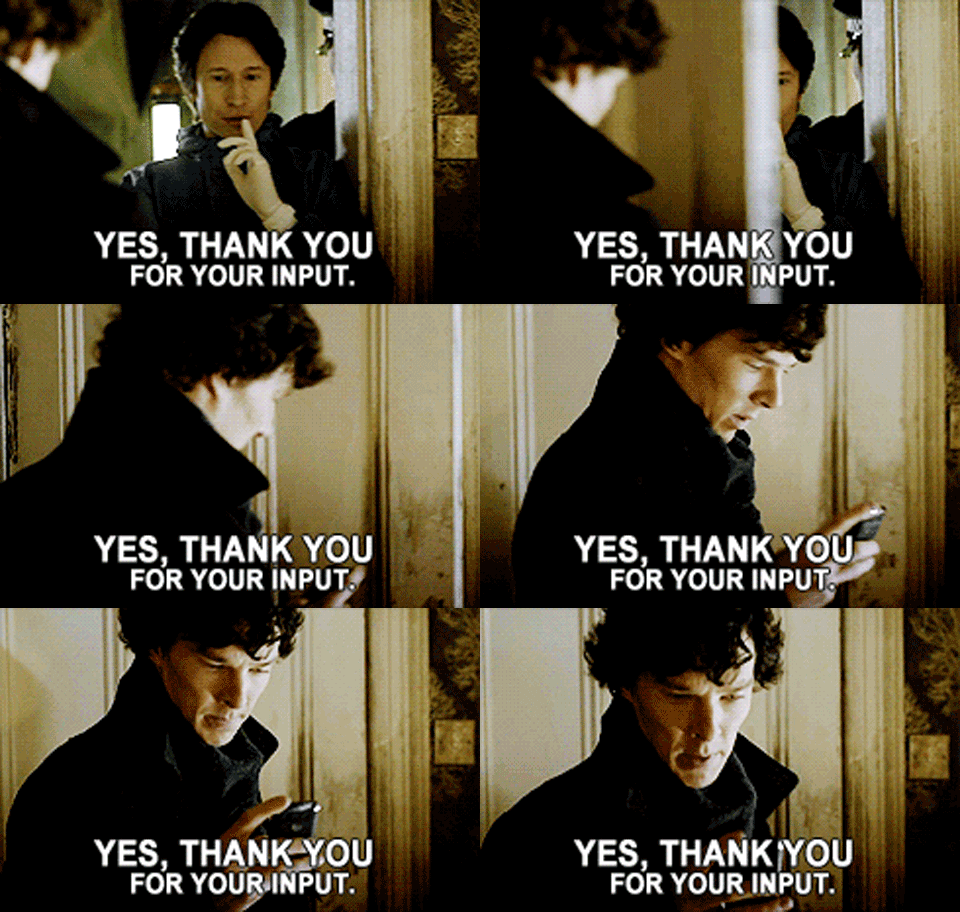
So, how have other companies found the freedom to create their Sherlock adaptations whilst dealing with this fierce opposition? Well, as trademark specialist Michael Alge points out ‘It is likely that... the recent projects would have been produced under licence from a trademark owner. Any such licences would also likely include a structure that permits the licensee to distribute and sell pre-recorded DVDs of the films or TV series in question, and to sell related merchandising spinoffs.’ (New Legal Review, 2014). Indeed, the heirs claimed that they had previously granted licenses to high-profile, well-established projects, such as BBC's Sherlock, CBS's Elementary and the Warner Bros films by Guy Ritchie. This point was made to prove that these superior companies also regarded the Doyle heirs "official executors" and as "as a crucial source of IP Rights" (New Legal Review, 2014).
But eventually, to the delight of fans around the world, Sherlock Holmes and his companions were declared public domain, free for all to use after the courts ruled in favour of Klinger. The judge decided that "...once work enters the public domain it cannot be appropriated as private (intellectual) property,' and even the most creative of legal theories cannot trump this tenet," (Gardner, 2013). This meant that from now on, no company such as the BBC, Warner Bros and CBS, was obliged to pay a fee to the estate, and the success of their IP is entirely theirs!
The court also noted that the estate was not seeking to protect the Sherlock Holmes stories, but rather to simply stop any story about the detective being published without payment to the estate. So now, in the words of Leslie Klinger: “Holmes and Watson belong to the world, not to some distant relatives of Arthur Conan Doyle." (as cited in Rimmer, 2013)
It’s elementary...

Although many Sherlock adaptations have been a success, it's worth mentioning that having a strict control over an IP could have had detriment effect on the franchise- as it would ultimately discouraged creativity. Scholars explain that the success of this court ruling has given other artists, not only high profile studios, a greater incentive to "create other works inspired by [Sherlock], because they won’t have to pay a license fee to do so." (Posner, as cited in Gardner, 2013). With this in mind, these events were vital to the future of the Film and Television industry, as it will allow the franchise to expand into more and more adaptations like never before.
So what can I learn from all of this? Well, this answers my previous question of who actually owns Sherlock Holmes, the world’s most repackaged IP? I can confirm that no one single entity holds full control and ownership over Sir Arthur Conan Doyle's Sherlock, and each company, including BBC's Sherlock, will have generated their own valuable IP rights, allowing them to exploit their own works in any way the see fit... as long as they do so without copying each other. Whether or not an adaptation is better than another, that's a story for another day, but for now we can all agree (apart from the Doyle estate) that Sherlock belongs to the public. This famous detective has been added to a "storehouse of cultural ideas" (Decherney, 2012; p.4) and is there to stay...
References and Bibliography:
Bainbridge, David I. Intellectual Property. Harlow, England: Longman, 2002. Print.
Baxter, Joseph. 'What Sherlock Holmes Looks Like As An Old Man'. Cinemablend.com. N.p., 2015. Web. 17 Jan. 2015.
Campbell, Tina. 'New Sherlock Is Happening And Here Are The Pictures'. Metro. N.p., 2015. Web. 15 Jan. 2015.
Chen, Jonathan. 'New Image Of Ian Mckellan As Older Sherlock Holmes In Mr. Holmes'.pastemagazine.com. N.p., 2015. Web. 17 Jan. 2015.
Crossmap.com,. 'Sherlock Holmes 3 Release Date And Casting: Sherlock Holmes 3 Won't Have A Dr. Watson?'. N.p., 2015. Web. 16 Jan. 2015.
Cullin, Mitch. A Slight Trick Of The Mind. New York: Nan A. Talese, 2005. Print.
Durrani, Arif. 'Benedict Cumberbatch's Sherlock Helps BBC Worldwide Return £173.8M To BBC - Media News - Media Week'. Mediaweek.co.uk. N.p., 2014. Web. 16 Jan. 2015.
'Elementary'. CBS, 2012. TV programme.
Facebook,. 'Mr. Holmes'. N.p., 2015. Web. 15 Jan. 2015.
Fifth Estate. Bill Conden, 2013. film.
Free Sherlock!,. 'Free Sherlock!'. N.p., 2013. Web. 11 Jan. 2015.
Gardner, Eriq. 'Conan Doyle Estate Loses Appeal Over 'Sherlock Holmes' Rights'. The Hollywood Reporter. N.p., 2014. Web. 15 Jan. 2015.
Glenza, Jessica. 'Sherlock Lives In Public Domain, US Court Rules In Case Of The Heckled Brand'. the Guardian. N.p., 2014. Web. 15 Jan. 2015.
Hills, Matt. Fan Cultures. London: Routledge, 2002. Print.
IMDb,. 'Mr. Holmes (2015)'. N.p., 2015. Web. 17 Jan. 2015.
IMDb,. 'Sherlock (TV Series 2010– )'. N.p., 2015. Web. 16 Jan. 2015.
Jenkins, Henry. Textual Poachers. New York: Routledge, 1992. Print.
King, Laurie R, and Leslie S Klinger. In The Company Of Sherlock Holmes. Print.
King, Laurie R, Leslie S Klinger, and C. Alan Bradley. A Study In Sherlock. Scottsdale, AZ: Poisoned Pen Press, 2011. Print.
Langshaw, Mark. ''Young Sherlock Holmes' Remake In The Works'. Digital Spy. N.p., 2012. Web. 15 Jan. 2015.
Lewis, Lisa A. The Adoring Audience. London: Routledge, 1992. Print.
Lopera, Hernan Ruiz. N.p., 2015. Web. 16 Jan. 2015.
Mr. Holmes. Bill Conden, 2015. film.
New Legal Review,. 'Baker Street Variations: The IP Adventures Of Sherlock Holmes'. N.p., 2014. Web. 15 Jan. 2015.
Pearson, Roberta E, and Anthony Neil Smith. Storytelling In The Media Convergence Age. Basingstoke: Palgrave Macmillan, 2014. Print.
Rimmer, Matthew. 'Free Sherlock Holmes: The Copyright Battle Of Baker Street'. The Conversation. N.p., 2013. Web. 16 Jan. 2015.
Rottentomatoes.com,. 'Sherlock: Season 1'. Web. 16 Jan. 2015.
'Sherlock'. BBC, 2010. TV programme.
Sherlock Holmes: A Game Of Shadows. Guy Ritchie, 2011. film.
Sherwin, Adam. 'Legal Thriller Looms As Sherlock Takes His Caseload To New York'. The Independent. N.p., 2012. Web. 16 Jan. 2015.
Stein, Louisa Ellen, and Kristina Busse. Sherlock And Transmedia Fandom. Jefferson, N.C.: McFarland, 2012. Print.
The Economist,. 'Who Owns Sherlock Holmes?'. N.p., 2013. Web. 16 Jan. 2015.
The Hollywood Reporter,. 'Sherlock Holmes: Judge Declares Popular Detective In Public Domain'. N.p., 2013. Web. 15 Jan. 2015.
Vanderburgh, George A et al. [The Universal Sherlock Holmes]. [Toronto, Ont.]: Metropolitan Toronto Reference Library, 1995. Print.
VanderSchuit, John. 'See Ian Mckellen As Old Sherlock In 'Mr. Holmes' - Craveonline'. CraveOnline. N.p., 2015. Web. 16 Jan. 2015.
Without A Clue. Thom Eberhardt, 1988. film.
Witkin, Robert W. Adorno On Popular Culture. London: Routledge, 2003. Print.
Yoon, Rita. 'Judge Posner Solves Sherlock Holmes Copyright Case - Intellectual Property - United States'. Mondaq.com. N.p., 2014. Web. 16 Jan. 2015.
Young Sherlock Holmes. Barry Levinson, 1985. film.
Images:


No comments:
Post a Comment